There were four insights that we picked up on together in class that I know I, at least, hadn't ever considered before.
Joseph Smith's Experience in the Sacred Grove Was The Best EFY Ever
EFY is the Church's summer religion camp for teenagers, as you likely know. The camps are super fun, and very inspirational! I attended two or three myself, and absolutely loved them. As great and uplifting as they are, their effect is unfortunately not entirely permanent, as is true of all spiritual experience. Most attendees leave EFY with high hopes for how they will live a more godly life upon returning home, and while I would imagine most indeed remain better than before, I would guess that most people are like me - you don't maintain the same level of zeal and you therefore don't fully reach your hoped-for new standard completely. As we discussed it as a class, that was common among those of us who had attended.
The insight was the analogy to the First Vision. Although Joseph's experience could in every way be described as the best EFY ever, it was still temporary and he was still just 14 years old. He had to "go home" and try to carry on the spirit of what he felt during the period of illumination, and, like those of us in the class, he didn't feel like he lived up to the new standard perfectly.
Light-Mindedness vs. Light-Heartedness
Joseph confessed being guilty of levity after the First Vision. What is levity?
In our words we called it light-mindedness, and defined that as possessing or exhibiting a lack of regard and reverence for sacred things. To help the class get a taste of light-mindedness, I asked them how they would feel if they saw someone flippantly take a handful of bread off of a sacrament tray rather than carefully taking just one piece. It feels disgusting even to think about; like nails on a chalkboard. We can sense there is something tragically wrong with that.
But does that mean we take everything in life so seriously that we don't have a sense of humor? What things are appropriate to be light with?
We termed this light-heartedness: the attitude of and desire to love and uplift others through cheerful countenances and friendliness, to faithfully disregard the cares of this world and the inhibitions of fear in preference for the eternal perspective of faith, hope and charity. We had a great compare and contrast between these two, and I thought it was really insightful.
How Long Would You Pray
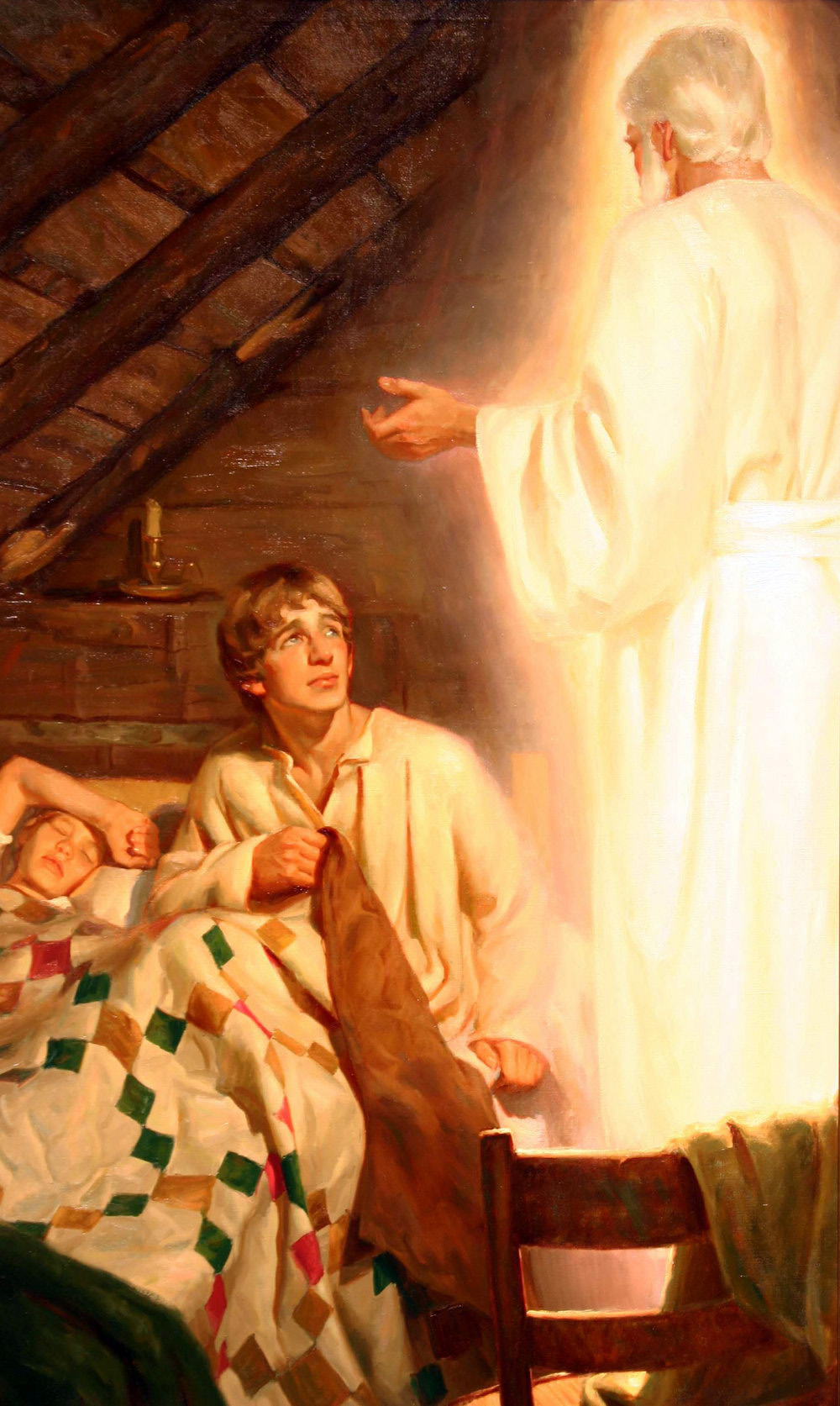
In seeking clarity and forgiveness from God for the times when he felt he had crossed over the line from light-heartedness to light-mindedness, Joseph received a visit from an angel. This was Moroni. Joseph says that Moroni visited him "while I was thus in the act" of praying, but he doesn't mention how long he had been praying before the visit. This allowed us the opportunity to wonder, and to ask ourselves, "how long would I be willing to pray to receive assurance from God that I am living as he would have me?" Five minutes? Ten?
My favorite of the insights was this fourth one.
When Moroni appears in the room, Joseph reports feeling fear - which seems to be the common response everyone has throughout the scriptures when they see an angel. Seeing angels is scary (or at least surprising) for everyone, apparently. At least at first. Joseph may have understandably felt a special degree of trepidation in this particular instance because he admits that it was a prayer of repentance and self-perceived guilt that led him to pray. So, what's the pattern? We established that it's normal to feel hesitant and at least a little scared when we approach the Lord or his representatives seeking forgiveness.
But, and this is the inspiring part for me, Joseph says that "the fear soon left (him)."
The fear doesn't last long! As soon as you get into that bishop's office and start talking you will begin to realize that you are loved and accepted and understood and "the fear (will) soon (leave you)" too. Don't let the fear keep you back from breaking into the relieving embrace of clarity and cleanliness. Push through it, trusting that there is joy on the other side, because I can promise you with all my heart that there is! Don't let the fear rob you of that experience. Take Alma the younger's words as your inspiration and motto: "And oh, what joy, and what marvelous light I did behold; yea, my soul was filled with joy as exceeding as was my pain!"
This life is an opportunity for us to learn from our own experience to distinguish right from wrong. Joseph Smith's life was no different. We can all look to and learn from his example of how to stay faithful after "EFY," how to pray in humble faith, how to push through and past the fear of embarrassment, and then how to faithfully act upon the Lord's direction, whatever the sacrifice.